Profitability Series
Profitability Series 2: Importance of BSR
BSR is one of the most important metrics while tracking growth on Amazon.
Unit velocity plays a huge role in defining BSR (best selling rank) which sets up your marketing funnel.
So what does that funnel look like on Amazon?
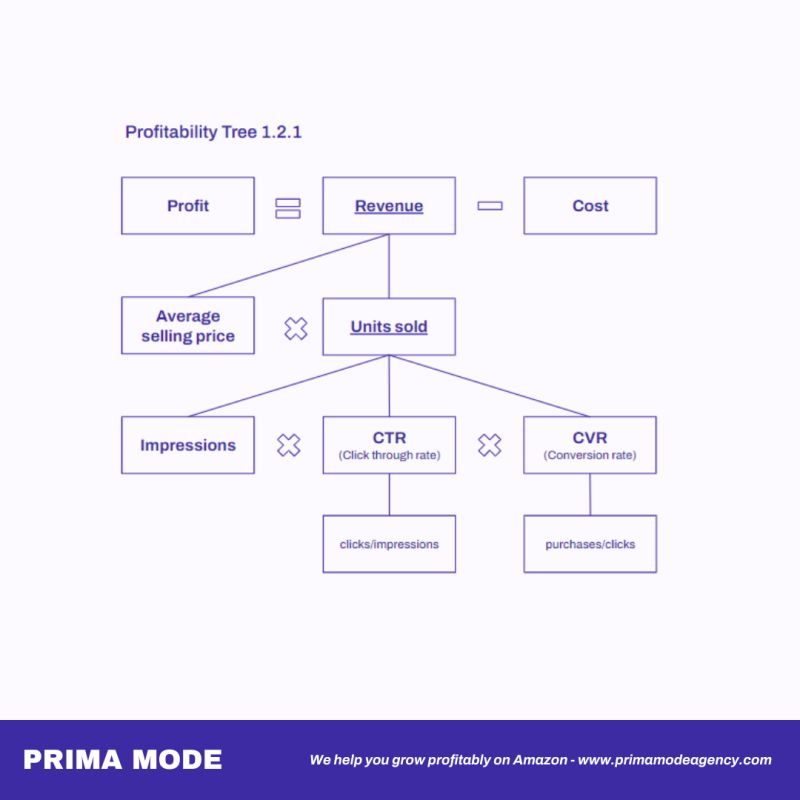
Simply put Profit = Revenue - Cost and Revenue = ASP x Units sold
ASP’s impact on the P&L is largely defined by sales mix, so let’s connect units sold with everyday-jargon like impressions, CTR, and CVR, back to profitability on Amazon.
Units sold can further be broken down in the form of a simple customer journey, let’s see what that looks like on Amazon.
→ a customer types in a keyword looking for a product (this determines search volume)
→ a list of products show up on page 1 based on their BSR (organic) or ad bids (paid) and the eye-views on these listings get counted as impressions
→ based on what vibes with the customer they click on your listing (your CTR or click through rate)
→ they’ve stepped onto your digital store and if you’re successful in getting them to click ‘buy now’ or ‘checkout from their cart,’ they’ve purchased a unit & thus converted (CVR or conversion rate) - battle won!
well, they can get the product, not like it, leave a bad review and you’ll wish that purchase never happened.. but converting this journey into an equation, we can tie these metrics back to revenue and profitability.
Units sold = Impressions x CTR x CVR
Impressions are simply the traffic that your brand’s listings get.
CTR is once the customer clicks on the listing with an intent to buy or explore the product.
CVR is when the customer decides to buy the product after going through the listing.
The number of impressions a listing gets is really defined by BSR
Making BSR a starting point that triggers the customer journey to even take place.